
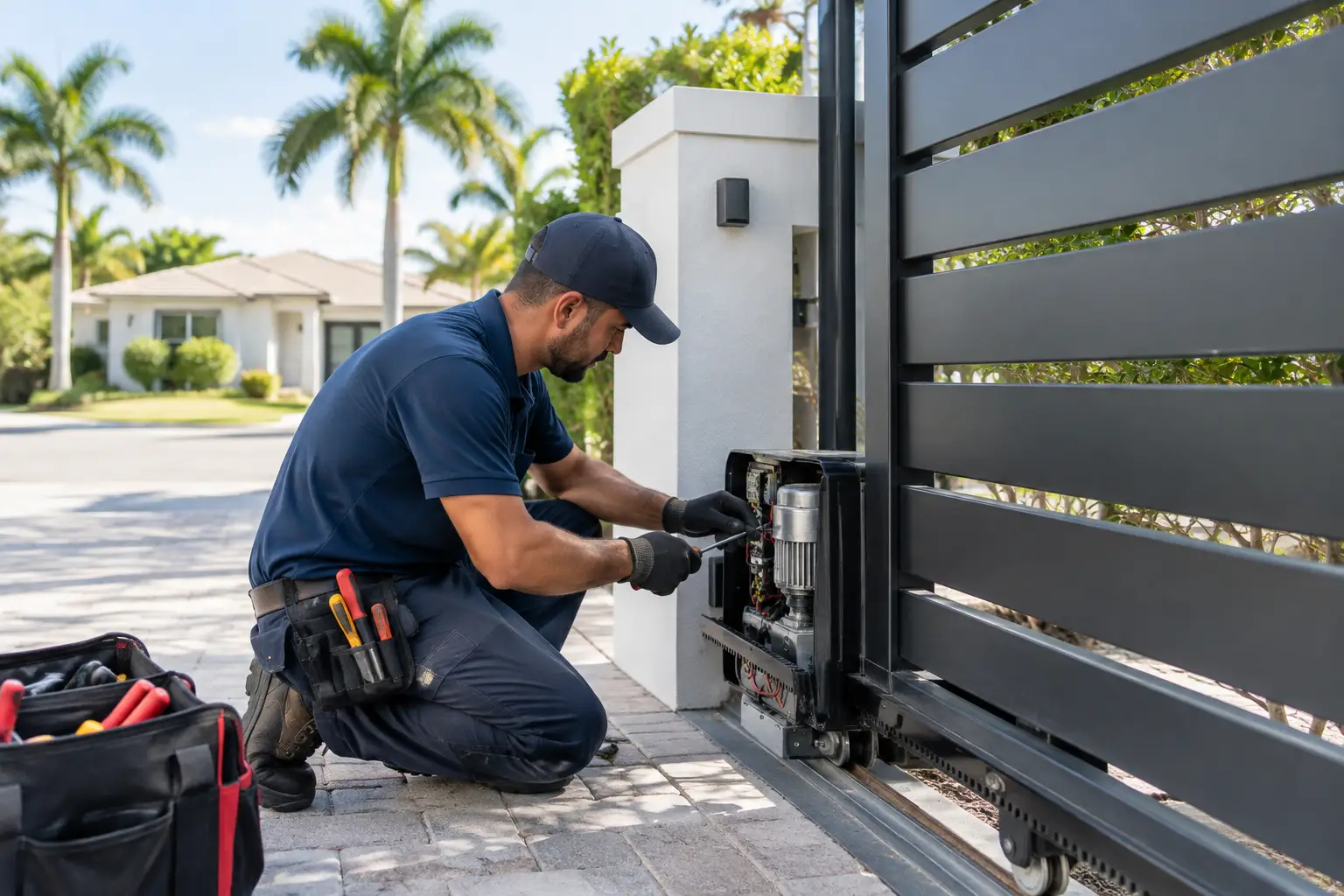
A gate that will not open is more than an inconvenience when you are trying to leave for work, receive a delivery, or secure your property at night. For fast automatic gate repair in Sunrise or anywhere in Broward County, call Garage Door Kingdom at (786) 258-8283. A trained technician can identify whether the problem is mechanical, electrical, or related to the access-control system before a small failure becomes a safety or security issue.
When an Automatic Gate Needs Immediate Repair
Do not keep cycling a gate that is dragging, reversing unexpectedly, making grinding sounds, or stopping partway through its travel. Repeated attempts can burn out an operator, strip a drive component, damage a track, or put extra force on hinges and rollers. If the gate is blocking a vehicle, stuck open, or failing to close and latch, treat it as a priority repair.
A gate that remains open can leave a residence, community entrance, warehouse, or parking area exposed. A gate that remains closed can restrict access for residents, employees, deliveries, and emergency services. The right response depends on the situation, but forcing the gate by hand is rarely the answer. Heavy sliding and swing gates can move suddenly when a chain, arm, wheel, or operator component has failed.
If the system has a manual release, use it only as directed by the manufacturer and only after the gate is stable. Keep children, pedestrians, and vehicles clear of the travel path until the problem is inspected.
Common Automatic Gate Repair Problems
Automatic gates rely on several systems working together. The visible gate panel may be in good condition while a hidden electrical connection, safety device, or control-board setting prevents normal operation. A proper diagnosis starts with the gate type and the exact symptom.
The Gate Will Not Open or Close
A dead gate can be caused by a tripped breaker, failed outlet, damaged wiring, drained battery backup, remote-control issue, faulty keypad, or an operator that has gone into protection mode. In commercial and HOA systems, the issue may also involve a telephone-entry unit, RFID reader, vehicle loop, camera integration, or access credential programming.
Power is not always the problem. A sliding gate that has come off alignment, has debris in the track, or has worn wheels may place too much resistance on the operator. A swing gate may stop because its hinges have sagged, an actuator arm is binding, or the ground has shifted enough to change the gate’s path.
The Gate Opens but Will Not Close
When a gate opens normally but refuses to close, the safety circuit is often the first place to check. Photo eyes can be blocked by leaves, insects, landscaping, or dirt on the lenses. Misalignment, loose wiring, and sun glare can also interrupt the beam. A damaged safety edge, vehicle loop, or obstruction sensor may produce the same result.
Never bypass safety devices to make a gate close. Those devices are designed to prevent the gate from closing on a car, person, pet, or object. A technician should correct the source of the fault and test the system through a full open-and-close cycle.
Grinding, Jerking, or Slow Movement
Grinding, popping, chain noise, and uneven travel usually point to mechanical wear. Sliding gates commonly develop worn rollers, bent track sections, loose chain tension, misaligned guide rollers, or failing gate wheels. Swing gates can suffer from corroded hinges, worn pivot points, damaged arms, and mounting posts that have moved.
South Florida heat, humidity, heavy rain, and salt air can speed up corrosion and degrade electrical connections. Lubrication helps only when the gate is properly aligned and the correct components are intact. Applying grease to a damaged track or worn wheel may temporarily quiet the system, but it will not restore safe operation.
Remote, Keypad, or Intercom Access Problems
If the gate works from one device but not another, the operator itself may be fine. A dead remote battery, lost programming, keypad battery, damaged antenna, weak receiver, or outdated credential can be the cause. Still, intermittent access should not be dismissed as a minor nuisance, especially at a commercial site or gated community.
A technician can separate an access-control problem from an operator problem, repair the failed component, and confirm that approved users can enter while unauthorized access remains restricted. This is especially valuable when gates work with keypads, telephone entry, RFID tags, camera systems, or smart controls.
Why DIY Automatic Gate Repair Can Create Bigger Problems
Homeowners can safely check for obvious obstructions, confirm that a breaker has not tripped, replace a remote battery, and gently clean photo-eye lenses. Beyond those basic checks, automatic gates involve heavy moving equipment, high-voltage connections, stored energy, and safety devices that must be set correctly.
The trade-off with a quick DIY fix is simple: a reset may get the gate moving, but it can hide the reason it failed. A gate that repeatedly trips, reverses, or strains is signaling a problem that needs correction. Improper adjustments can damage the operator or create a dangerous closing force.
Licensed and insured technicians can inspect the entire system instead of replacing parts by guesswork. That includes the operator, wiring, controls, gate structure, rollers or hinges, safety equipment, limit settings, and access devices. For properties with older equipment, repair may be practical. For a gate with repeated failures, obsolete controls, major corrosion, or an operator that no longer matches the gate’s weight and usage, replacement can be the better long-term value.
What a Professional Gate Service Visit Should Include
A real repair visit should begin with clear troubleshooting, not an automatic recommendation to replace everything. The technician should determine what failed, explain the repair options, and provide an upfront estimate before work begins.
For a sliding gate, service may include adjusting alignment, replacing rollers or guide wheels, repairing a track, correcting chain tension, securing hardware, and testing the operator under normal load. For a swing gate, the work may involve restoring hinge alignment, repairing an actuator arm, reinforcing mounting points, or resetting travel limits.
Electrical and access-control testing matters just as much. After repairs, the gate should respond correctly to its approved controls and stop or reverse as designed when safety devices detect an obstruction. A gate that simply moves again is not necessarily a gate that is ready for dependable daily use.
Repair or Replace? Make the Decision on Condition, Not Frustration
Repair is often the smart choice when the gate structure is sound and a defined component has failed. A worn roller, damaged photo eye, failed remote receiver, loose connection, or operator adjustment may be resolved without replacing the complete system.
Replacement deserves consideration when the gate is structurally compromised, the operator is undersized or severely corroded, replacement parts are unavailable, or repair calls are becoming routine. Property owners may also choose an upgrade to add battery backup, better safety equipment, smartphone access, RFID credentials, video intercoms, or commercial-grade controls.
For Broward County properties, replacement planning can also involve permits, wind considerations, and Florida Building Code requirements. Gate and fence work should be evaluated as part of the property’s full access and security plan, not as an isolated piece of equipment.
Preventive Maintenance Protects Access and Security
A gate does not need to be broken to need service. Periodic inspection can catch loose hardware, corrosion, roller wear, failing batteries, weak safety-device signals, and gate alignment problems before they create a lockout or leave the entrance unsecured.
Maintenance frequency depends on gate weight, daily cycles, exposure to weather, and whether the system serves one home, a multi-family property, or a busy commercial entrance. Gates near coastal conditions or subject to heavy use need closer attention than a lightly used residential gate. Keeping the travel path clear and reporting unusual sounds early can prevent more expensive damage.
If your automatic gate is stuck, noisy, unreliable, or no longer controlling access the way it should, call Garage Door Kingdom at (786) 258-8283 for a free estimate. Our Sunrise-based team serves Broward County with practical repair recommendations, upfront pricing, and service focused on getting your property access safe, secure, and dependable again.