
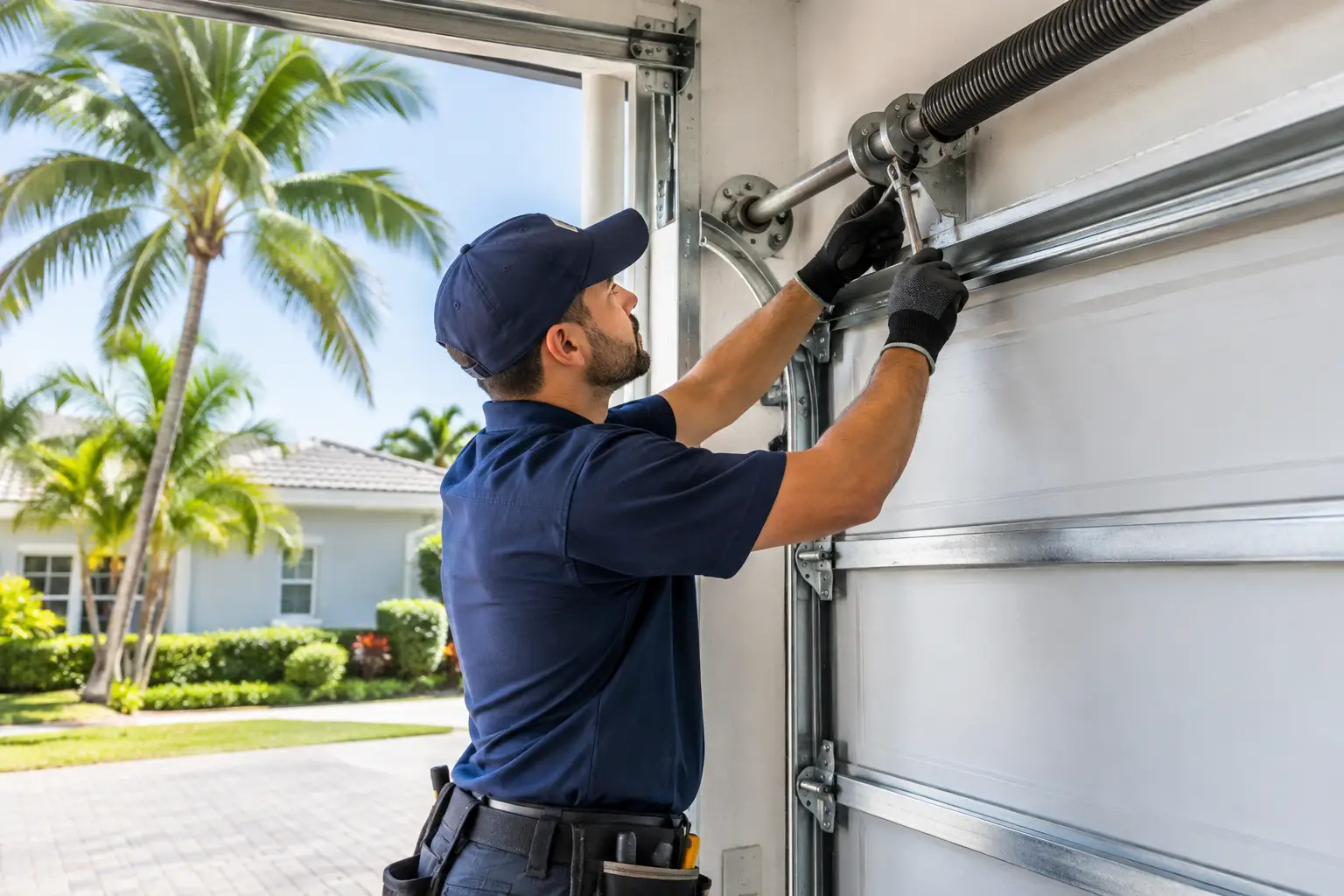
Call (786) 258-8283 if your garage door is grinding, sticking, showing rust, or moving unevenly. In Broward County, garage door maintenance salt air is not an optional chore. Salt carried inland by coastal winds, paired with heat, humidity, and afternoon storms, can quietly attack the hardware that keeps your door secure and operating safely.
A garage door may look fine from the driveway while corrosion is building on springs, cables, rollers, hinges, tracks, and opener components. Waiting until the door will not open is usually the expensive route - and a failing spring or cable can create a real safety issue. A practical maintenance routine helps catch damage early, but some parts should only be inspected or adjusted by a trained technician.
Why Salt Air Damages Garage Door Parts
Salt air does not have to come with oceanfront living. Wind can carry salt particles well inland, where they settle on metal surfaces. Humidity keeps those particles active, creating a damp, corrosive film that speeds up oxidation. Rain may rinse visible grime away, but it does not necessarily remove salt from hinge barrels, spring coils, cable drums, track joints, and the lower sections of the door.
The damage often starts small. You may notice a faint orange stain around a hinge, white oxidation on aluminum, a noisy roller, or a powdery residue near fasteners. Over time, corrosion can weaken cables, roughen track surfaces, seize hinges, and make the opener work harder than it should.
South Florida heat adds another layer of stress. Lubricant can dry out, weather seals can harden, and the door can expand and contract through daily temperature changes. For homes in the High-Velocity Hurricane Zone, neglected hardware also deserves attention before storm season. A door that is already binding or poorly balanced is not in the condition you want when severe weather arrives.
Garage Door Maintenance Salt Air Checklist
The goal is not to take apart the door yourself. It is to remove corrosive buildup, recognize warning signs, and schedule service before a small issue becomes a failed door.
Rinse and clean the exposed surfaces
Every few months, gently rinse the exterior of the door, tracks, hinges, and visible hardware with fresh water. Use a soft cloth or sponge with mild soap for areas holding dirt, pollen, or salt residue. Rinse again and dry accessible metal surfaces where possible.
Avoid pressure washing close to seals, opener components, photo-eye sensors, bearings, or electrical connections. High-pressure water can force moisture where it does not belong and can strip finishes from some doors. Do not use harsh acids, abrasive pads, or strong degreasers on painted, wood-look, aluminum, or glass garage doors unless the manufacturer specifically approves them.
Look for corrosion where it matters most
During a quick visual check, inspect the bottom brackets, lift cables, roller stems, hinges, track hardware, fasteners, and spring area. Rust on a decorative handle is one thing. Rust on a cable, bottom bracket, or spring is a reason to call for professional inspection.
Never touch, loosen, or attempt to lubricate a damaged torsion spring or lifting cable under tension. These components carry significant force. If you see fraying cable strands, heavy spring rust, a bent track, or hardware pulling away from the wall or door sections, stop using the door until it has been checked.
Keep drainage and weather seals working
Standing water at the bottom of the garage door keeps salt and moisture against the lowest panel, bottom seal, and hardware. Clear leaves and debris from the area around the threshold and make sure water drains away from the opening.
Check the bottom weather seal and side seals for cracks, gaps, flattening, or brittleness. A worn seal can allow wind-driven rain, insects, and salt-laden moisture into the garage. Replacing a seal is often far less costly than dealing with water damage or advanced corrosion on the lower door sections.
Listen during every cycle
Your door should not slam, scrape, jerk, or sound like it is fighting its way up. Squealing may point to dry rollers or hinges. Grinding can indicate track, roller, or opener issues. A loud bang followed by a door that only opens a few inches often signals a broken spring.
Noise alone does not identify the failed part, and spraying every moving component with a general-purpose lubricant can make matters worse. The right lubricant and amount depend on the component. A professional tune-up can clean, lubricate, and inspect the system without contaminating tracks or creating a slippery mess.
How Often Should a Salt-Air Garage Door Be Serviced?
For most Broward County homes, a professional garage door inspection and tune-up once a year is a sensible baseline. Homes closer to the coast, properties exposed to constant wind, and frequently used doors may benefit from service twice a year. The same applies to commercial doors, shared garage entrances, security gates, and high-cycle systems that operate many times each day.
Frequency depends on more than location. A rarely used detached-garage door may need less adjustment than a primary garage door that opens and closes several times daily. But low use does not eliminate corrosion risk. In fact, doors that sit unused can develop seized rollers, stiff hinges, and hidden rust without giving you much warning.
A professional maintenance visit should include more than lubrication. The technician should inspect spring condition, cable wear, rollers, hinges, tracks, bearings, fasteners, weather seals, safety sensors, door balance, opener force settings, and reversal function. For wind-rated doors, the inspection should also consider visible condition of reinforcement hardware and mounting points.
Do Not Ignore Balance and Opener Strain
A garage door opener is not designed to lift the full weight of a door. Its job is to guide a properly balanced door through its travel. When springs lose tension, corrode, or break, the opener can become strained. You may see the door reverse unexpectedly, move slowly, stop halfway, or make a humming sound without lifting.
It is tempting to reset the opener repeatedly or increase force settings. That can hide the symptom while putting more strain on the motor, gear system, and door hardware. It can also reduce the safety margin that helps the door reverse when it meets an obstruction.
If the door feels unusually heavy, will not stay open when manually raised, or drops quickly, do not keep operating it. Keep people and vehicles clear of the opening and arrange an inspection. Spring replacement and cable work require the correct tools, parts, and safety procedures.
Corrosion Prevention During Storm Season
Before hurricane season, inspect your garage door well before a storm is approaching. A last-minute repair may not be possible when demand is high, and working on a damaged door in severe weather is unsafe. Look for loose hinges, rusted fasteners, missing reinforcement components, damaged seals, and door sections that no longer align correctly.
If you are considering a replacement door, choose one appropriate for Broward County's HVHZ requirements. Wind rating, permits, Florida Building Code requirements, and NOA documentation can matter for the property, the installation, and future insurance or resale questions. A beautiful door is not enough if its wind-load performance and installation details are wrong for the location.
For existing doors, do not assume aftermarket braces or temporary fixes automatically make the system hurricane-ready. The right approach depends on the specific door, opening, tracks, mounting structure, and approved components.
When to Call for Garage Door Service
Call for service promptly if corrosion is visible on lifting cables or springs, the door is off track, the opener runs but the door does not move, the door will not close safely, or you hear a sharp snap from the garage. Those are not watch-and-wait problems.
For routine concerns, early service still pays off. Replacing a few corroded rollers or worn seals is easier than dealing with a seized door, damaged opener, or failed cable. Garage Door Kingdom provides free estimates before work begins, with licensed and insured technicians serving Sunrise and Broward County.
Salt air will always be part of life in South Florida, but a stuck or unsafe garage door does not have to be. Call Garage Door Kingdom at (786) 258-8283 to schedule a free estimate and get your door inspected before corrosion turns into a breakdown.