
If a hurricane is approaching and your garage door rattles, sags, or has never been evaluated for wind load, call (786) 258-8283 before conditions worsen. Knowing how to secure hurricane garage doors can protect far more than the door itself. When a large garage opening fails, wind can enter the home, increase internal pressure, and put the roof, walls, and belongings at greater risk.
For homeowners in Broward County, this is not a job for plywood, duct tape, or a last-minute guess. South Florida sits in the High-Velocity Hurricane Zone (HVHZ), where garage doors need the right rating, hardware, track support, and installation details to perform as a system. A door may look solid on a calm day and still be unprepared for hurricane-force wind.
Start With the Door’s Wind Rating and Documentation
The first question is simple: was your current garage door designed and installed for the wind requirements at your property? Look for a permanent label on the inside of the door sections, usually near an end stile, that identifies the manufacturer, model, design pressure, and applicable approval information.
In Broward County, a garage door should have documentation appropriate for Florida Building Code and HVHZ requirements. This may include a Florida Product Approval or Notice of Acceptance (NOA), depending on the product and installation. The paperwork matters because wind resistance is not based on the door panel alone. It depends on the tested configuration: the door, reinforcement, track, fasteners, jamb attachment, and opening size.
Do not assume an older door is compliant because it has survived previous storms. Wear, corrosion, changed building requirements, or an undocumented replacement can all affect the answer. If you cannot locate the label or paperwork, arrange a professional inspection rather than relying on appearance.
How to Secure Hurricane Garage Doors Before a Storm
A wind-rated garage door in good condition is your strongest protection. If the door is rated but has loose hardware, bent track, damaged rollers, or a weak connection to the wall, it still needs attention. Begin preparations early, while technicians can safely inspect and repair the system.
Inspect the tracks, brackets, and fasteners
Open the door fully during calm weather and examine both vertical and horizontal tracks. Tracks should be straight, firmly anchored, and properly supported. Look for loose lag screws, missing bolts, cracked wood framing around the opening, rusted track brackets, or separation between the track and the jamb.
Salt air, humidity, and years of use can corrode fasteners and weaken connections without causing an obvious daily operating problem. A door that moves normally may still need new hardware or reinforcement. Never try to straighten a badly bent track while the door is under spring tension. That can cause the door to bind or fall.
Check door sections and reinforcement struts
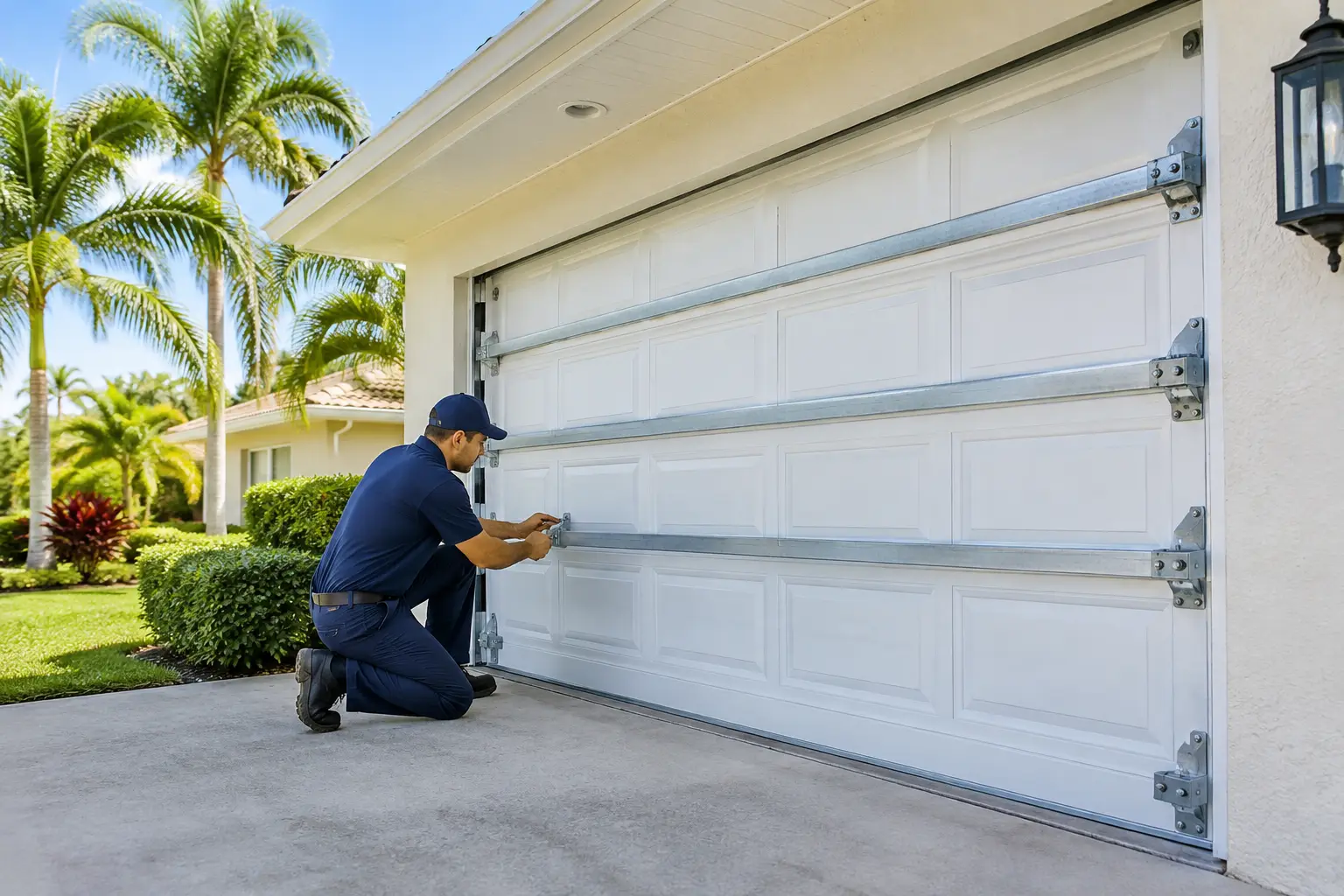
Many hurricane-rated sectional doors use horizontal reinforcement struts on the interior side of the panels. These help the door resist bending inward under wind pressure. Confirm that each required strut is present, straight, and securely fastened.
Do not remove struts for storage racks, decorative work, or insulation projects. If a strut is missing, installed incorrectly, or damaged, the tested wind rating may no longer apply. The same warning applies to replacing panels with mismatched parts. A garage door is not interchangeable piece by piece unless the manufacturer approves that configuration.
Test the balance and operating condition
With the opener disconnected only when it is safe to do so, a properly balanced door should stay near the halfway point rather than dropping rapidly or shooting upward. A door that is heavy, jerky, uneven, or loud can indicate worn rollers, cable trouble, track issues, or failing springs.
Do not adjust torsion springs or lift cables yourself. These components carry extreme tension. A licensed and insured technician can correct the mechanical issue and verify that the door closes fully against the weather seal before a storm.
Secure the opener and manual lock correctly
Your opener should hold the door closed, but it is not a substitute for a properly rated door or wind-approved reinforcement. Make sure the opener is mounted securely, the rail is not loose, and the safety sensors are aligned so the door can close reliably.
If your door has a manual slide lock, do not engage it while the opener is connected. The next time someone operates the opener, the locked door can damage panels, the opener, or both. If power is lost during a storm, follow the manufacturer’s instructions for emergency release and manual operation only when conditions are safe.
Do Not Rely on Temporary Braces Unless They Are Approved
Some older garage doors can use removable hurricane bracing systems. These may run vertically from the floor to the header or use specially engineered reinforcements attached to approved anchor points. They can be useful, but only when they are designed for your exact door and opening.
A homemade 2x4 brace placed under the door or against the ceiling is not a proven hurricane solution. It may shift, damage the door, interfere with the tracks, or create a false sense of security. Likewise, screwing random metal bars across the panels can weaken the door rather than strengthen it.
If your existing door is not wind-rated, temporary bracing may be an interim option in limited situations, but replacement is often the more dependable long-term decision. The right choice depends on the age of the door, its condition, the available documentation, and whether the opening and framing can support an approved system.
Know When Replacement Is the Safer Answer
A hurricane-rated replacement door is worth serious consideration when your existing door has no verified wind rating, repeated corrosion, dented or cracked panels, deteriorated wood framing, failing tracks, or obsolete hardware. Replacement also makes sense if you are planning a remodel, upgrading the opener, or trying to improve security and curb appeal at the same time.
The lowest-priced door is not automatically the lowest-cost choice. In South Florida, the installation must match the approved product details and local code requirements. That includes the correct track configuration, reinforcement, anchors, and fasteners. A properly documented installation can also make future permitting, inspections, real-estate transactions, and insurance conversations easier.
For an attached garage, consider the everyday benefits as well. A newer wind-rated door can improve operation, reduce exterior noise, provide better sealing, and pair with a smart Wi-Fi opener that lets you confirm the door is closed when you are away.
Your Hurricane Garage Door Checklist
Complete this work before watches and warnings are issued. Waiting until the day before landfall limits repair options and makes it harder to source the right parts.
- Close the garage door completely and confirm it reaches the floor evenly.
- Remove vehicles, tools, ladders, and loose items that could block the door or damage its interior during strong vibration.
- Inspect the exterior weather seal, bottom seal, tracks, brackets, rollers, panels, and reinforcement struts for visible damage.
- Confirm the opener operates correctly and keep the emergency release instructions accessible.
- Photograph the door, its label, and the surrounding opening before the storm for your records.
- Keep remotes, keys, and a charged phone available, but avoid opening the door once high winds begin.
After the storm, do not operate a door that has shifted in the opening, has bent tracks, loose cables, damaged panels, or water around electrical components. Take photos first if it is safe, then have the system inspected. Forcing a damaged door open can turn a repairable issue into a major replacement or create a serious injury risk.
Get a Local HVHZ Garage Door Evaluation
Hurricane preparation is most effective when it happens before the forecast becomes urgent. A professional evaluation can identify loose hardware, unsafe spring conditions, corrosion, missing reinforcement, undocumented doors, and installation details that need correction. It also gives you a clear answer on whether repair, approved bracing, or replacement is the responsible next step.
Garage Door Kingdom provides free estimates for hurricane-ready garage door repairs, wind-rated replacements, and preventive inspections across Broward County. Call (786) 258-8283 to schedule an evaluation and secure the largest moving opening in your home before the next storm puts it to the test.