
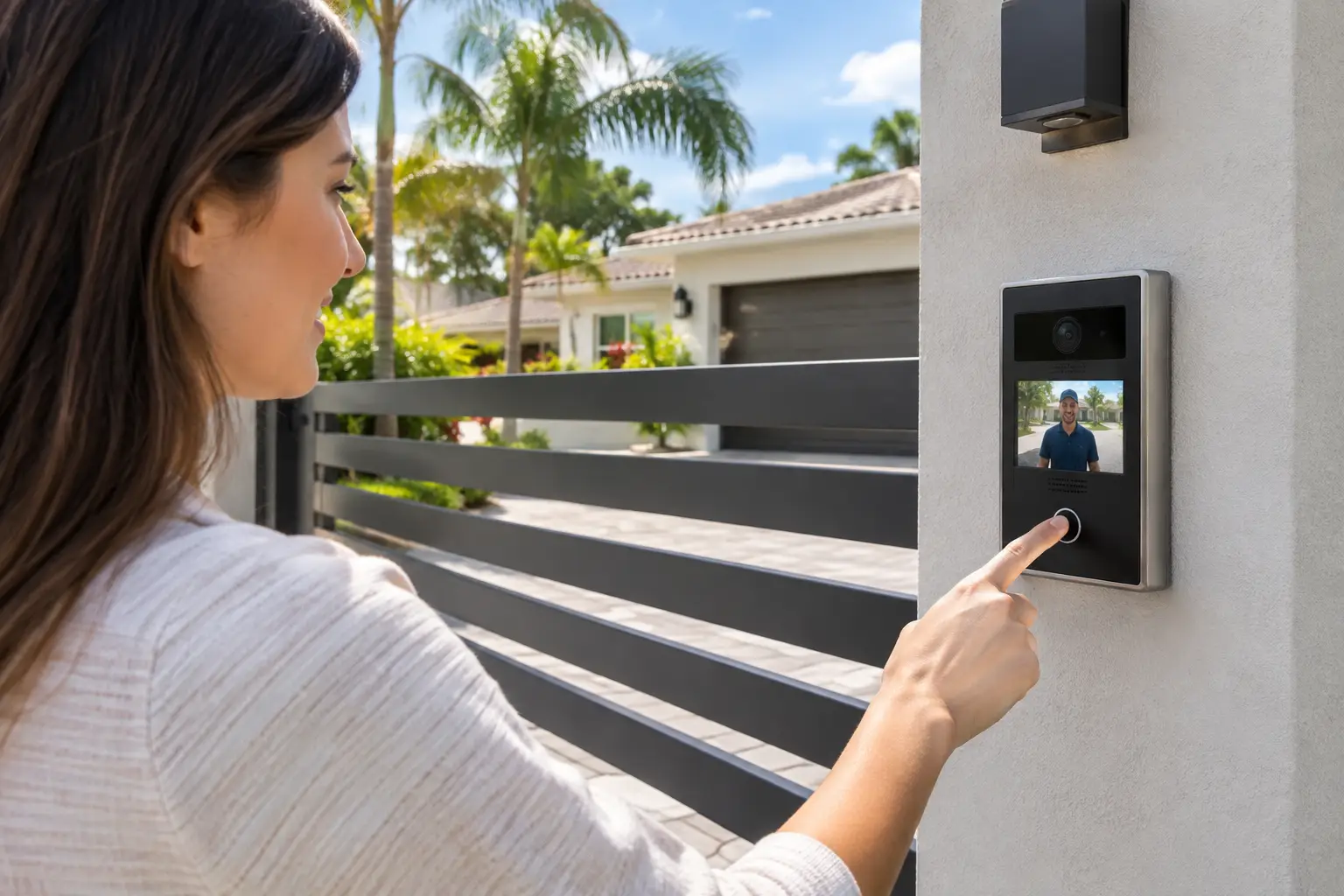
For a free on-site estimate for video intercom gate installation, call (786) 258-8283. A gate that opens only after you see and speak with a visitor gives your property a meaningful layer of control - but only when the equipment, wiring, gate operator, and entry layout work together.
A video intercom is not simply a doorbell mounted at the driveway. It is part of an access-control system that must perform in heat, rain, humidity, salt air, and the high-wind conditions common across Broward County. The screen or mobile app may be the feature you notice every day. The hard work happens behind it: secure power, protected low-voltage wiring, a compatible release method, clear camera placement, and a gate that operates safely every time.
What a Video Intercom Gate System Actually Does
At its simplest, a visitor presses a call button at the gate station. The system sends video and audio to an indoor monitor, mobile phone, office desk station, or more than one of those locations. The resident or staff member can verify who is outside, talk to the visitor, and release the gate without walking to the entrance.
For a homeowner, that can mean confirming a delivery, guest, contractor, or service call from inside the house. For an HOA, warehouse, medical office, or commercial property, it can mean directing visitors to the right entrance while keeping vehicle access controlled.
The right configuration depends on how the property is used. A single-family home may need a simple video call station with smartphone access. A multi-unit property may need directory calling, multiple monitors, PIN codes, RFID credentials, and audit records. Commercial sites often benefit from a system that integrates gate control with cameras, employee credentials, or a staffed front office.
Start With the Gate, Not the Screen
A polished touchscreen cannot correct a dragging sliding gate, a swinging gate that binds at the hinges, or an operator with intermittent safety devices. Before a video intercom gate installation, the gate and automation should be inspected as a complete system.
The operator must have a safe way to receive the open command from the intercom. That may involve a dry-contact relay, a compatible controller input, or an access-control interface. It also needs properly placed photo eyes, monitored safety edges where required, and a functioning manual release for a power outage or mechanical failure.
This is where a one-team contractor matters. Separating gate repair, electrical work, and access control among several vendors can create finger-pointing when the entrance fails. A qualified installer should identify whether the gate is ready for automation and intercom control before mounting new equipment.
Sliding gates and swing gates have different needs
A sliding driveway gate usually has a single, predictable travel path and may place the call station on a pedestal near the vehicle approach. The installer has to keep the station visible and reachable without forcing drivers to leave the vehicle or pull too close to the gate.
Swing gates need extra attention because the moving leaf can create pinch points and changes the best position for the station. The call box cannot obstruct the swing path, and the camera angle should not be blocked by an open gate leaf, landscaping, or a vehicle waiting at the entrance.
Camera Placement Is a Security Decision
The camera should show a visitor's face clearly in real conditions, not just during a daytime test. Low afternoon sun, headlights after dark, rain on the lens, and a bright sky behind a visitor can all reduce useful image quality.
A good installation considers camera height, approach angle, lighting, and background. Mounting the station too high can capture hats instead of faces. Mounting it too low invites damage and gives a poor view of taller visitors. If the gate entrance is wide or has a separate pedestrian opening, one station may not provide complete coverage.
For larger properties, a dedicated camera aimed at the vehicle lane can complement the intercom camera. The intercom is for identification and communication. A separate surveillance camera may be better for recording a broad view of vehicles entering, exiting, or waiting near the gate. These systems can work together, but they serve different purposes.
Wired vs. Wireless Video Intercom Gate Installation
Wireless equipment can be practical when trenching is difficult, the gate is far from the building, or an existing conduit is unavailable. It can reduce construction disruption, but it is not automatically the best answer. Wireless signal strength changes with distance, concrete walls, metal gates, dense landscaping, neighboring networks, and severe weather.
A hardwired connection is usually the more dependable long-term choice when the site allows it. Protected cabling can provide stable communication, power options, and fewer concerns about dropped video calls. The work may require trenching, conduit, surge protection, and careful separation of low-voltage wiring from power wiring. That added preparation costs more upfront, yet it often prevents recurring reliability problems.
Cellular intercoms are another option for remote locations. They can work well where internet service is not practical, but they typically involve an ongoing service plan and depend on cellular coverage at the gate. Before choosing one, confirm who will manage the account, add or remove users, and receive alerts.
South Florida Weather Changes the Installation Standard
Broward County properties deal with heat, daily rain, humidity, lightning exposure, and, in some areas, salt-laden air. Exterior access equipment should be selected and installed for the environment it will face.
Weather-rated enclosures, sealed conduit entries, corrosion-resistant mounting hardware, and properly installed surge protection are not cosmetic upgrades. They help protect the communication equipment and gate controls from moisture and electrical damage. A loose gasket, exposed splice, or unprotected cable can become a service call after one heavy storm season.
Hurricane preparation also matters. Pedestals, posts, and equipment enclosures must be anchored correctly. Wiring penetrations should be protected, and the system should not interfere with the gate's emergency release or required safety operation. Depending on the scope of the gate, electrical work, and site conditions, permits and applicable Florida Building Code requirements may need review before work begins.
Plan Daily Access Before Installation
The best system is the one people can use without creating workarounds. Before selecting equipment, decide who needs access and how they should enter. Family members may prefer mobile app access. Housekeepers, vendors, and recurring contractors may need time-limited codes. Employees may use cards, fobs, or keypad credentials. Property managers may need the ability to remove access immediately when a tenant or employee leaves.
Also decide what happens when the internet is down, a phone battery dies, or power is interrupted. A reliable access plan includes physical keys, manual gate release procedures, and a clear list of authorized contacts. For commercial properties, this should be documented rather than left to one person who knows the system.
Privacy deserves the same attention. Use strong account passwords, remove former users promptly, and avoid sharing one permanent code with every service provider. Video intercom convenience should not create an open invitation to the property.
Questions to Ask Before Approving the Work
A professional estimate should address more than the price of the intercom unit. Ask whether the current gate operator is compatible, whether the gate needs repair first, how power and communication wiring will reach the entry point, and whether conduit or trenching is included.
You should also know where calls will ring, how many users can be added, whether remote access needs an internet or cellular plan, and what happens during a power outage. If a contractor cannot explain the safety devices on the gate or the condition of the operator, the installation plan is incomplete.
At Garage Door Kingdom, the goal is not to sell a screen at the driveway. It is to build a dependable property-entry system that lets you identify visitors, control access, and keep the gate operating safely in the conditions it faces.
If your gate is unreliable, your entrance layout is changing, or you want to add verified visitor access before the next busy season, call (786) 258-8283 for a free estimate. A properly planned video intercom system should make arriving home and managing visitors feel more controlled, not more complicated.