
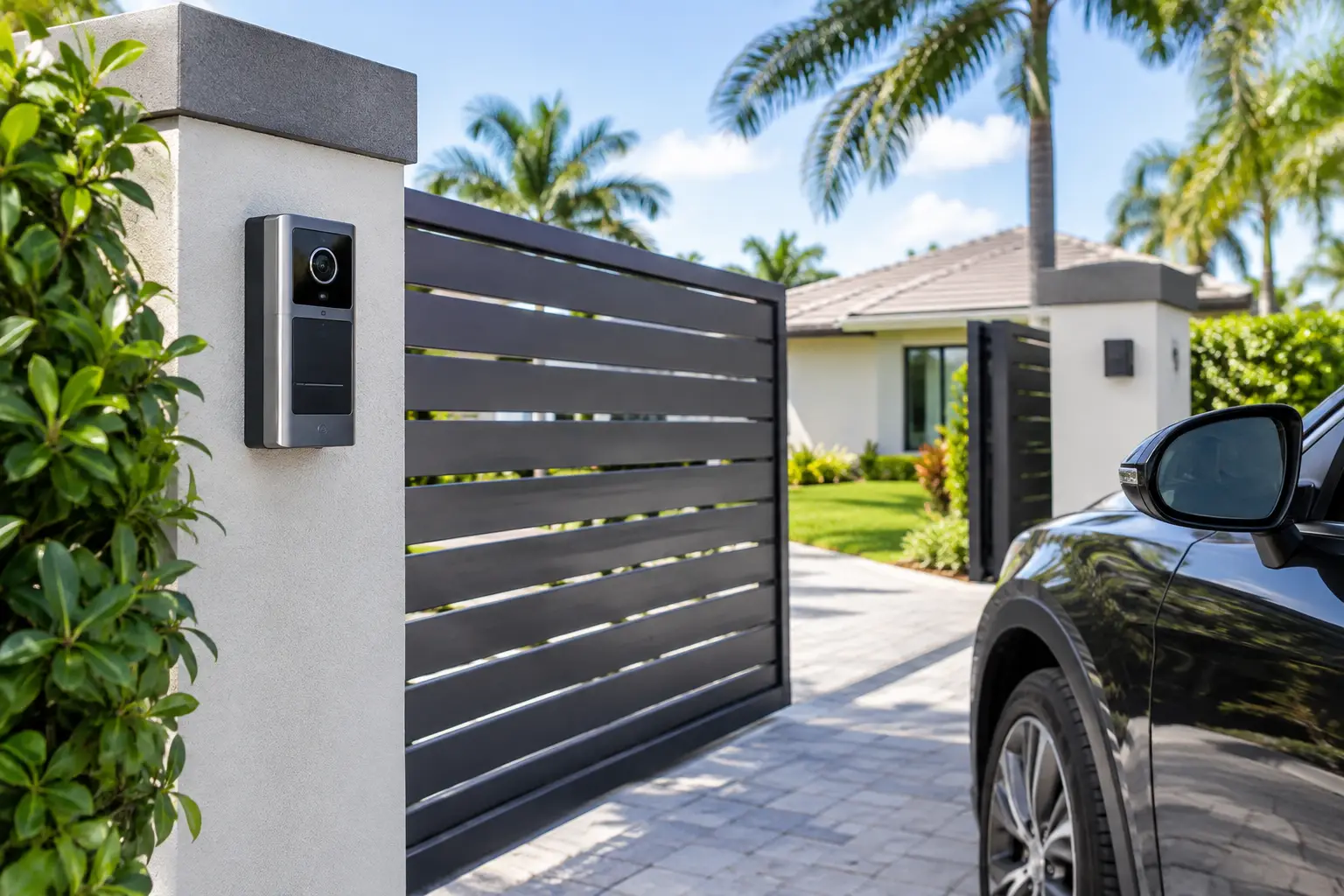
Call (786) 258-8283 for a free estimate on camera integrated gate access that protects your entrance without making daily arrivals harder. A gate that opens for the wrong vehicle, a visitor you cannot identify, or a delivery left outside the property line is not a small inconvenience. It is a gap in your property's security plan.
For homes, HOAs, warehouses, offices, and multifamily properties, a camera-connected gate gives you a clear view of who is requesting entry and a record of what happened at the entrance. The right system combines gate automation, cameras, credentials, intercom communication, and safe release controls into one practical operation.
What Camera Integrated Gate Access Actually Does
A camera at a gate can do more than record a driveway. When it is integrated with the access system, it helps the person managing the property verify a visitor before releasing the gate. Depending on the equipment and property needs, the system may combine live video, recorded clips, a video intercom, keypad codes, remote controls, RFID tags, telephone entry, or mobile credentials.
The most useful setup is not always the one with the most features. A single-family home may need a camera, a video intercom, and reliable smartphone notifications. A commercial site may need multiple camera angles, scheduled access for vendors, credential tracking, monitored gate status, and records that help management investigate an incident.
The goal is simple: make authorized entry easy while giving unauthorized visitors fewer opportunities to get through.
Why Broward Properties Need a Complete Entry System
South Florida gates work in conditions that expose weak installations quickly. Heat, humidity, wind-driven rain, salt air near the coast, and hurricane preparation all affect cameras, gate operators, wiring, hinges, locks, and control boxes. A camera system cannot compensate for a gate that drags, reverses unexpectedly, has damaged photo eyes, or fails to latch.
That is why gate security should be evaluated as one system rather than as separate purchases. The camera placement must account for glare, nighttime visibility, vehicle approach direction, landscaping growth, and the distance to the entry point. The operator must have correct safety devices. Low-voltage wiring and network equipment need protected routing, weather-rated enclosures, and dependable power.
For properties in Broward County's HVHZ, installation choices also matter when storm conditions arrive. Proper mounting, protected equipment locations, secure conduits, and an informed plan for outages can prevent a security upgrade from becoming a vulnerable point in bad weather.
A Camera Does Not Replace Required Gate Safety Devices
Cameras help you make an access decision. They do not replace photo eyes, monitored entrapment protection, safety edges, vehicle loops, proper force settings, or other safety measures required for the gate and its use.
This distinction matters most at busy commercial entrances and community gates. A gate operator must detect and respond safely to people, vehicles, and obstructions even if a camera feed is unavailable or an attendant is distracted. A qualified technician should inspect the entire gate before connecting new access equipment.
Choosing the Right Camera-Integrated Gate Setup
Start with how people actually enter your property. If family members arrive in cars and occasional visitors use the pedestrian entrance, the system should handle both paths. If delivery drivers, service vendors, residents, employees, and guests all arrive through the same lane, access rules need to be clearer.
A good design answers practical questions before equipment is selected. Who can open the gate? Who needs to see visitors? Is access granted from a phone, an interior station, a guard desk, or a tenant directory? Should the system record every event? What happens when internet service or power is interrupted?
For many homes, a video intercom near the gate is the best starting point. It allows a resident to see and speak with the visitor, then release the gate only when appropriate. Adding a driveway-facing camera can capture a wider view of vehicles approaching and leaving.
For commercial properties, credentials often matter more than remote controls. RFID tags, key fobs, mobile access, keypads, and scheduled codes can reduce the number of physical keys in circulation. Some systems can create temporary credentials for contractors or deliveries, which is useful when access must be limited to certain dates or hours.
License plate recognition can be helpful at high-traffic sites, but it is not automatically the best answer. Performance depends on camera position, lighting, plate condition, vehicle speed, and the rules used to approve or deny entry. It should be planned as part of the access-control design, not added as an afterthought.
Camera Placement Is Where Many Installations Fail
A camera aimed directly at a gate often shows that the gate moved. It may not show the face of the person using it, the license plate of an approaching vehicle, or whether someone followed another vehicle through the entrance.
Effective camera placement usually separates these jobs. One view can cover the approach lane, another can focus on the visitor call station, and another can cover the inside area where tailgating may occur. The exact layout depends on the property, lighting, tree cover, gate type, and distance from the building.
Night performance deserves special attention. Infrared lighting can help in darkness, but reflective surfaces, headlights, and poorly positioned lights can wash out key details. A technician should account for real nighttime conditions, not just how the image looks during a daytime installation.
Privacy matters, too. Cameras should be aimed at the entry area and property access points, not casually into neighboring yards or private spaces. HOAs and commercial operators may also need written policies covering camera access, recordings, retention periods, and who is authorized to review footage.
Plan for Power, Internet, and Emergency Entry
Smart access equipment depends on electricity and, in many cases, an internet connection. That does not mean the gate should become unusable during an outage. The system should have a clear plan for safe operation, authorized manual release where appropriate, and emergency access procedures for first responders and property personnel.
Battery backup may keep selected equipment operating for a limited period, but capacity varies with the gate operator, camera load, cycle frequency, and battery condition. It is not a promise of unlimited operation. Cellular communication may offer an alternative at some sites, though it adds equipment and service considerations.
For commercial or HOA entrances, management should decide in advance whether the gate should remain secured, allow controlled exit, or follow a specific emergency procedure during a prolonged outage. The correct answer depends on the site's risks, occupancy, and local requirements.
When to Repair Before Adding Access Technology
Adding cameras and intercoms to a failing gate is usually money spent in the wrong order. Common warning signs include a gate that stops mid-cycle, scrapes the track, requires repeated remote presses, reverses without an obstruction, makes grinding sounds, or has damaged hinges, rollers, chains, or safety sensors.
Repairing the mechanical and safety issues first gives the access system a stable foundation. It also lets the installer route wiring properly and verify that the gate operator is suitable for the gate's weight, length, and expected daily cycles. A residential operator used beyond its intended capacity may work for a while, then become the weak point of the entire entrance.
Garage Door Kingdom can inspect the gate, operator, access controls, cameras, and related fencing as one project. That one-team approach avoids the common problem of separate vendors blaming each other when a gate will not open, an intercom loses communication, or a camera misses the view that matters.
What to Expect From a Professional Gate Access Estimate
A useful estimate should begin with an on-site review, not a guess based only on a photo. The technician should assess gate condition, existing operator capacity, electrical availability, communication path, camera locations, lighting, safety devices, and how residents, staff, and visitors need to enter.
Pricing can vary substantially because every entrance has different trenching, conduit, wiring, mounting, network, operator, and credential needs. A straightforward camera and intercom addition may be far different from a commercial system with multiple lanes, telephone entry, RFID credentials, recorded video, and gate repair. The best estimate explains the equipment, installation scope, and any repair work needed before the upgrade begins.
For Sunrise and Broward County property owners, work with a licensed and insured contractor that understands both automated gates and access-control equipment. That matters when the project involves permits, Florida Building Code considerations, hurricane exposure, or a system that must serve many people every day.
Call Garage Door Kingdom at (786) 258-8283 to schedule a free estimate for camera integrated gate access, gate repair, or a complete entry-system upgrade. A well-planned entrance gives you more than a better view of the driveway - it gives the people behind the gate confidence about who comes in and why.