
Call (786) 258-8283 for garage door spring replacement Sunrise homeowners can count on when a heavy door suddenly will not open, hangs crooked, or slams shut. Garage Door Kingdom provides a free estimate before work begins, so you know what the repair requires and what you will pay before a technician starts.
A broken spring is more than an inconvenient garage door
Most garage doors weigh far more than they appear to. Springs carry much of that weight, allowing the opener and the person using the door to raise and lower it with controlled force. When a spring breaks, the door may become too heavy for the opener, too dangerous to lift by hand, or impossible to operate safely.
A loud bang from the garage is a common first sign. Homeowners sometimes mistake it for an impact or a problem with the opener. If the opener runs but the door barely moves, rises a few inches and stops, or looks uneven, the spring system needs attention. Do not keep pressing the remote in hopes that the door will reset. Repeated operation can strain the opener, damage cables, or leave the door stuck in an unsafe position.
If your garage is the main entrance to your home, a failed spring is also an access and security problem. The priority is to secure the opening and get the door moving correctly again, not force it through another cycle.
What garage door spring replacement in Sunrise usually costs
Spring replacement pricing depends on the door's size, weight, hardware, and spring type. A basic residential replacement may cost a few hundred dollars, while larger insulated doors, custom doors, high-cycle upgrades, or repairs involving worn cables, bearings, drums, or brackets can increase the total.
The right spring is not selected by appearance alone. A technician needs to account for the door's actual weight, height, track configuration, cable drum setup, and cycle requirements. Installing an undersized or poorly matched spring may seem less expensive upfront, but it can make the door hard to balance and shorten the life of the opener.
For doors with two torsion springs, replacing both is often the smarter value when they were installed at the same time. They have carried the same workload, so the unbroken spring may be close to the end of its service life. There are situations where one spring is appropriate, but that decision should be based on the system's condition, not a quick guess.
A clear onsite estimate matters. Ask whether the quote includes the correct springs, labor, safety inspection, adjustment, and warranty coverage. Garage Door Kingdom provides transparent upfront pricing: what is quoted is what you pay.
Torsion springs and extension springs are not interchangeable
Torsion springs
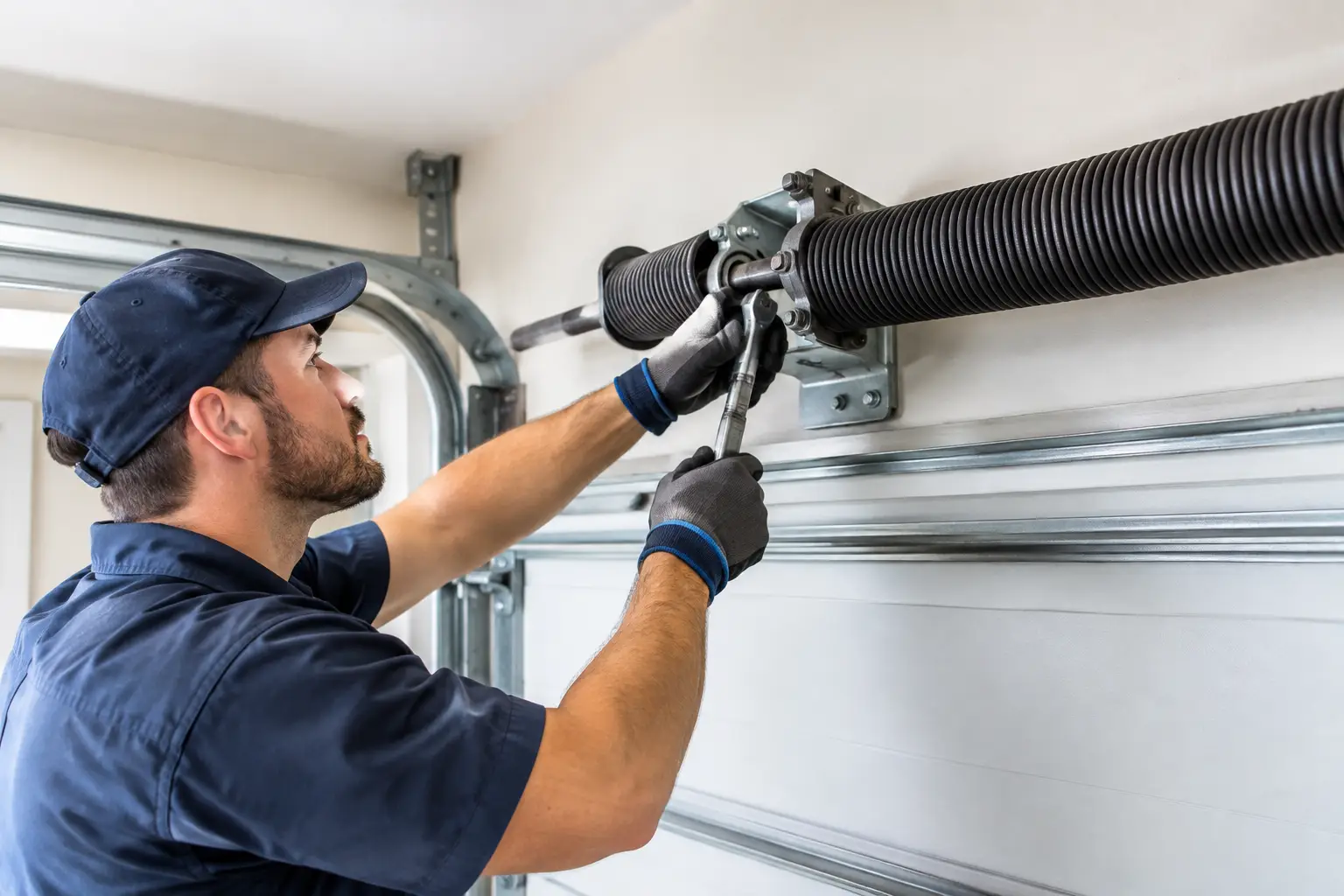
Torsion springs sit on a metal shaft above the garage door opening. They use stored torque to counterbalance the door and are common on modern residential doors, heavier doors, and many commercial applications. When one breaks, there is often a visible gap in the coil.
These springs require specialized winding tools and precise adjustment. The shaft, center bearing, cable drums, lift cables, and bottom brackets all work together. This is not a safe DIY project. A winding bar slip or incorrect adjustment can cause serious injury and expensive door damage.
Extension springs
Extension springs run along the horizontal tracks, typically on either side of the door. They stretch as the door closes and release tension as it opens. They can be found on lighter or older garage door systems.
Extension springs should be paired with properly installed safety cables. Without them, a broken spring can become a dangerous projectile. If your system lacks safety cables, or the pulleys and cables show wear, it is worth addressing those issues during the repair instead of treating the spring as the only problem.
Why Sunrise conditions can shorten spring life
Every spring has a cycle rating. One cycle is a complete opening and closing of the door. A household that uses its garage as the primary entrance can use far more cycles each year than expected, especially with multiple drivers, school drop-offs, deliveries, and weekend errands.
South Florida adds its own wear factors. Heat, humidity, and moisture can speed up corrosion on springs and hardware. Coastal salt air can affect Broward County properties as well, depending on location and exposure. Rusted coils, dry bearings, fraying cables, and loose hardware place extra stress on an operating system that already handles substantial tension.
A higher-cycle spring can be a good investment for a frequently used door. It costs more than a standard spring, but it may reduce the chance of another disruptive failure in the near future. For a lightly used detached garage, the standard option may be adequate. The best choice depends on the door and how your household actually uses it.
Do this when a garage door spring breaks
Keep people, pets, and vehicles away from the door until it has been inspected. If the door is open, do not stand or park beneath it. Avoid pulling the emergency release unless a technician has advised you to do so, particularly if the door is not fully closed or looks crooked in the tracks.
Do not attempt to lift the door alone. A broken-spring door can be unexpectedly heavy, and an uneven lift can pull a cable off a drum or damage the tracks. If you need urgent access to a vehicle or need the garage secured, explain the situation when you call so the service visit can be properly prepared.
If the door is closed and secure, leave it closed. Disconnecting the opener will not repair the problem and may create a new one if someone later tries to operate the door manually.
A proper repair includes more than swapping a spring
A dependable spring replacement should end with a balanced, tested garage door. Once the correct springs are installed, the technician should check cable condition and routing, drums, bearings, rollers, hinges, track alignment, bottom brackets, and opener force settings. The door should move smoothly and sit level when open and closed.
This inspection is especially valuable after a storm or power outage. A spring may fail independently, but high winds, impact, repeated manual operation, or a door that was already binding can expose other weaknesses. If you are considering a new wind-rated door or hurricane preparation upgrade, the existing spring and hardware setup should be evaluated as part of the larger installation plan.
For Broward County homes, door replacement and structural upgrades may involve Florida Building Code requirements, permits, and NOA documentation. A simple spring repair usually does not turn into a door replacement project, but a local contractor should be able to explain the difference clearly when damage or an upgrade calls for it.
When the opener is the real issue
Not every door that will not open has a broken spring. A dead remote battery, misaligned safety sensors, failed opener gear, damaged logic board, or stripped trolley can produce similar symptoms. The key difference is that a door with a broken spring often feels extremely heavy when disconnected and may not stay open manually.
That is why diagnosis should come before replacement. Replacing an opener when the door is unbalanced will not solve the underlying issue. In fact, an opener asked to lift a door without spring support can burn out. Conversely, replacing springs when the actual failure is electrical wastes time and money.
A trained technician can identify whether the problem is mechanical, electrical, or both and provide options before any work starts.
Get local help before the problem damages more parts
A broken garage door spring rarely gets better with continued use. Acting early can protect your opener, keep your garage secure, and prevent a minor hardware issue from becoming a larger repair. For same-day availability, a free estimate, and licensed, insured service from a real Sunrise team, call Garage Door Kingdom at (786) 258-8283. A properly balanced door should feel controlled, quiet, and dependable every time your family comes home.