
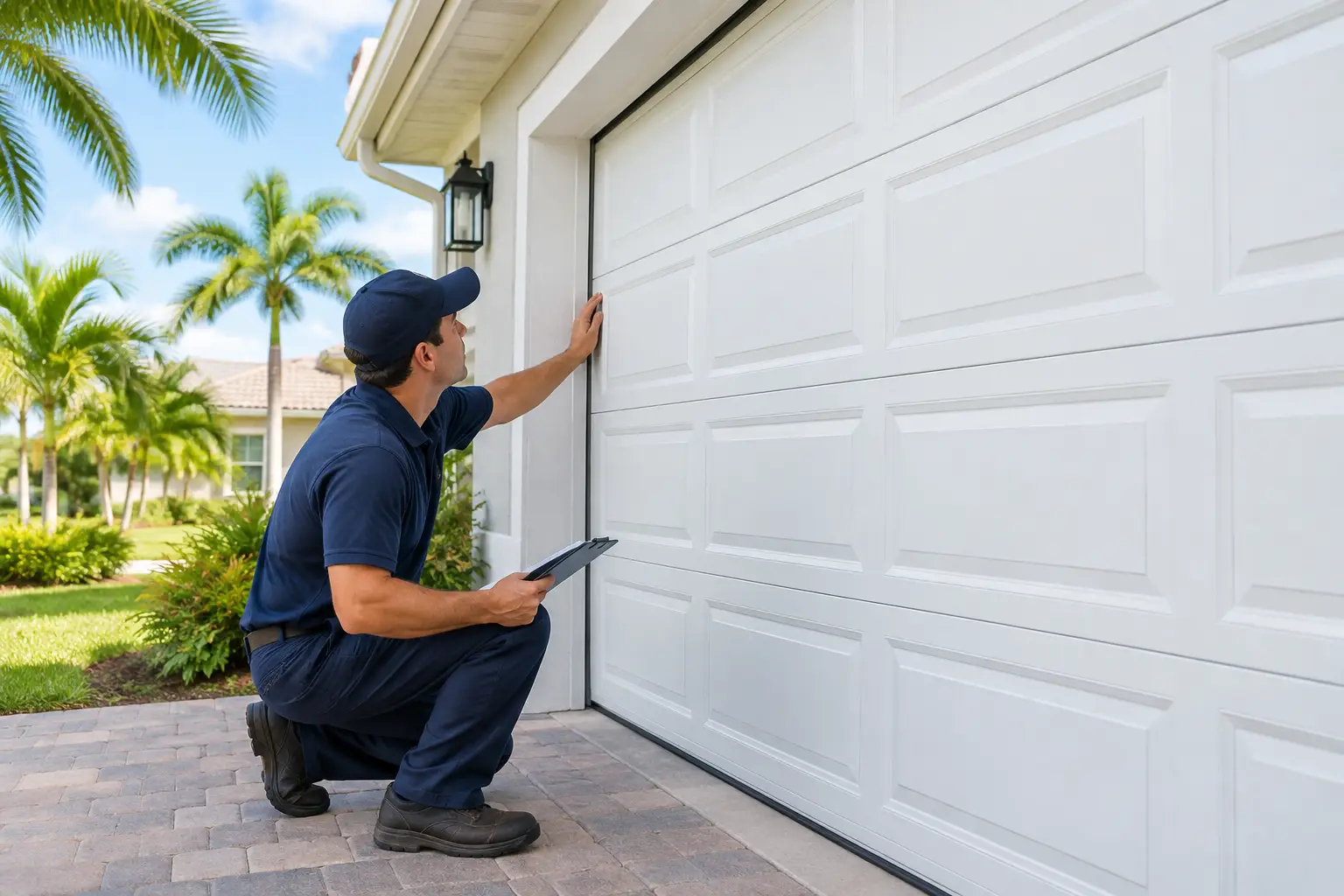
If your garage is attached to your home, its door is one of the largest and most vulnerable openings on the property. Call (786) 258-8283 for a free estimate on hurricane rated garage doors Florida homeowners need for Broward County conditions - before a named storm puts every installer’s schedule under pressure.
A garage door can look solid, open smoothly, and still be the wrong door for a High-Velocity Hurricane Zone (HVHZ) property. Wind does not only push against the outside of the door. Once an opening fails, pressure can build inside the home and place added stress on walls, windows, the roof system, and other openings.
That is why a hurricane-rated replacement is not simply a heavier door with extra hardware. The door, track, reinforcement, fasteners, jamb attachment, and installation method must work together as an approved system. For Sunrise and the rest of Broward County, the paperwork matters just as much as the panel design.
Why Hurricane Rated Garage Doors Matter in Florida
Florida garage doors are exposed to more than occasional storm gusts. They face intense sun, constant humidity, heavy rain, salt air in coastal areas, and the wind pressure requirements that apply in HVHZ locations. Over time, those conditions can corrode hardware, weaken rollers and hinges, loosen fasteners, and expose problems that were not obvious when the door was installed.
A properly selected wind-rated door is engineered and tested to resist specified positive and negative pressures. Positive pressure pushes the door inward. Negative pressure pulls it outward. Both forces matter during a hurricane, especially when wind direction shifts or a storm creates suction along the building exterior.
Homeowners sometimes assume hurricane panels or impact windows alone solve the garage issue. They do not. Your garage door needs its own approved wind-load rating and correct installation. A door that buckles, pulls away from its track, or loses its attachment points can turn a protected home into a more serious structural risk.
HVHZ, Florida Building Code, and NOA Documents
Broward County is within Florida’s High-Velocity Hurricane Zone. That designation brings stricter product and installation requirements than many other parts of the state. A door marketed as “hurricane resistant” is not automatically approved for every Broward home, opening size, or exposure condition.
The right question is not, “Is this a hurricane door?” Ask whether the specific door model and configuration are approved for your property. The answer can depend on the width and height of the opening, the door style, glass sections, track type, reinforcement package, mounting surface, and required design pressures.
What an NOA tells you
A Notice of Acceptance, commonly called an NOA, documents that a product system has been evaluated for use under applicable requirements. It is not decoration for a permit file. It identifies approved configurations and installation details that must be followed.
For example, a particular door may require specific reinforcement struts, a designated track gauge, a certain fastener size and spacing, or a particular jamb connection. Changing one component can take the installation outside the approved assembly.
A qualified contractor should review the product approval or NOA before ordering, not after the door arrives. That helps avoid a costly mismatch between the door you want and the documentation needed for your opening.
Permits are part of protection
A permit is not just a municipal delay. It creates a review and inspection process for work that affects a major exterior opening. Skipping permits can complicate a future sale, insurance questions, storm-damage claims, or corrections after the door is already installed.
Garage Door Kingdom handles the full process, including door selection, permit coordination, NOA documentation, installation, and Florida Building Code requirements. That one-team approach reduces the risk of a homeowner being left to sort out technical paperwork after a salesperson has disappeared.
How to Choose the Right Wind-Rated Door
Start with the property, not a catalog photo. A glass garage door, insulated steel door, carriage-house design, or commercial rolling door may all be available with wind-rated options, but the approved configuration and price can differ significantly.
Your contractor should measure the opening and inspect the existing framing, jamb condition, headroom, side room, and track layout. A damaged wood buck, cracked masonry, corroded fasteners, or weak attachment point may need attention before a new hurricane-rated system can be secured correctly.
Door weight is another practical consideration. Reinforcement and impact-rated glazing can add weight. Your opener must be appropriately matched, and the spring system must be correctly sized and balanced. An opener is designed to move a balanced door - it should not be forced to lift a door with weak, worn, or incorrectly adjusted springs.
Glass, insulation, and curb appeal
You do not have to choose between storm protection and appearance. Modern wind-rated doors come in insulated steel, contemporary aluminum and glass, traditional raised-panel designs, and other architectural styles. The trade-off is that specialty finishes, larger glass areas, and higher-performance glazing can affect lead time and total cost.
Insulation can be worthwhile for garages that share walls with living space, contain a workshop, or receive heavy afternoon sun. It may improve comfort and help the door operate more quietly. It does not replace a wind rating, however. A well-insulated door still needs the correct approved wind-load configuration for the location.
Signs Your Current Garage Door Needs Attention
Do not wait for storm watches to find out whether your door has problems. A door may need repair, reinforcement evaluation, or replacement if it shakes heavily in normal operation, has rust around hinges or bottom fixtures, shows bent tracks, has loose brackets, or contains cracked or sagging sections.
Pay close attention to the bottom of the door and the areas where the track attaches to the structure. Water intrusion, corrosion, and repeated vibration can affect components that are easy to overlook. If the door is noisy, uneven, or stops short of closing, schedule service rather than adding force through the opener settings.
A post-storm inspection also makes sense even if the door remained closed. Wind-driven debris, water exposure, and stress on tracks or reinforcements can create damage that is not visible from the street. Photographing the condition before repairs begin may also be helpful if you need to document a claim.
Can You Retrofit an Older Garage Door?
Sometimes, but it depends on the door and the approved system. Reinforcement kits, additional struts, upgraded tracks, bracing, and new attachment hardware may improve certain doors. They are not a universal substitute for a modern wind-rated replacement.
An older non-rated door may lack an approval path for retrofit, may have deteriorated panels, or may not be compatible with the hardware required for HVHZ compliance. In those cases, spending money to reinforce a failing door can be the wrong long-term decision.
A repair-first evaluation is still worthwhile. If the existing door is structurally sound and has a valid approved upgrade path, a retrofit may be practical. If the system is corroded, repeatedly failing, or cannot meet required documentation, replacement usually provides clearer protection and better value.
What Affects Hurricane Garage Door Cost?
There is no honest single price for a hurricane-rated garage door because the cost depends on the opening size, door material, insulation, glass selection, wind-load requirements, track and reinforcement system, framing repairs, permitting, and removal of the existing door.
Be cautious with quotes that list only a door model and a low starting price. Ask whether the price includes the required wind-load components, hardware, permit handling, documentation, installation, and disposal. A quote should identify what is actually being installed so you can compare complete systems rather than comparing a bare door to a code-ready installation.
The least expensive door is not always the lowest-cost choice once emergency repairs, permit corrections, premature corrosion, or replacement after storm damage enter the picture. The right system should fit your home, satisfy local requirements, and operate reliably in South Florida weather.
Get the Door Checked Before Storm Season
Storm preparation works best when it is done on a normal day, not when supply chains and appointment calendars are strained. A professional inspection can identify worn springs, damaged rollers, weak hardware, opener safety issues, corrosion, and whether your existing door has the documentation needed for your property.
For a free estimate or an on-site evaluation of hurricane-rated garage door options, call (786) 258-8283. A properly selected, permitted, and installed door gives your home one less major opening to worry about when the forecast changes.